
Add Row
Add Element
cropper
update
National Cannabis Newswire
update
Add Element
  • Home
  • Categories
    • news
    • trends
    • insights
    • industry
    • legalization
    • health
    • culture
    • advocacy
    • Brands
    • New Mexico Dispensaries
    • Arizona Dispensaries
July 29.2025
2 Minutes Read

Why Louisiana Farmers Urgently Need a New Farm Bill for Stability

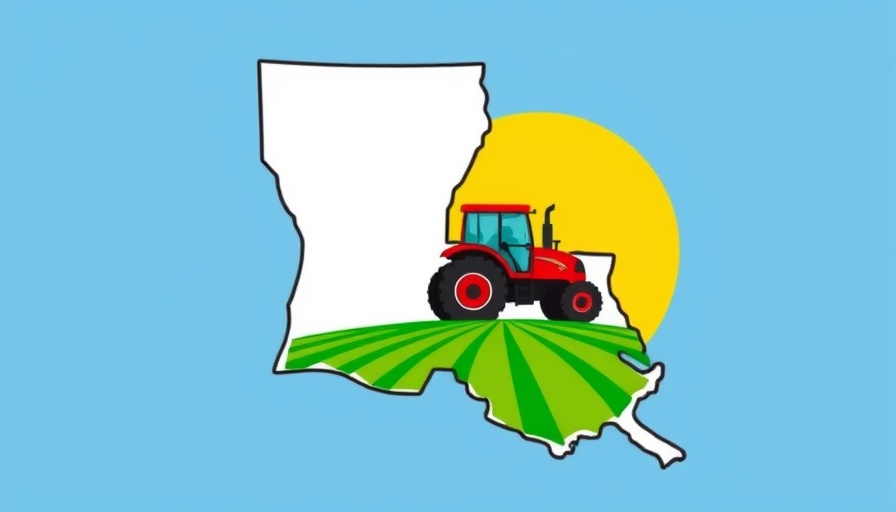
Illustration of Louisiana with tractor and farmland, highlighting need for new Farm Bill.

Urgent Need for a Renewed Farm Bill in Louisiana

In the ever-evolving landscape of American agriculture, timing is everything. The discussion around the necessity of a new Farm Bill has gained traction, particularly for Louisiana, where agriculture is crucial to the state's economy and rural communities. Seasoned voices like Andy Brown and Madison Plaisance from the Louisiana Farm Bureau Federation stress that without urgent action to renew the Farm Bill, the stability of local farms hangs in the balance.

The Farm Bill: A Lifeline for Louisiana Agriculture

The Farm Bill is more than just a piece of legislation; it serves as a vital framework that supports farmers, ranchers, and rural residents. It addresses risk management, supporting programs that allow agricultural producers to navigate the unpredictable nature of farming. For Louisiana farmers, including cotton and corn growers, this has far-reaching implications as their livelihoods depend on reliable access to resources and support.

Food Security: A Matter of National Concern

As highlighted in discussions about the Farm Bill, food security is intrinsically linked to national security. A thriving agricultural sector ensures that food systems remain stable, feeding not only local populations but also contributing to the national supply chain. The call to action generates a compelling argument for Congress to prioritize the Farm Bill, keeping in mind the uncertainty Louisiana families might face without it.

Insights from Industry Experts: The Stakes are High

Discussion on the podcast sheds light on the countless challenges Louisiana farmers are currently facing, from volatile weather patterns affecting planting seasons to rising costs of inputs like fertilizer. These concerns are magnified by crop pests that threaten yields. The Farm Bill has historically provided funds and programs aimed at mitigating these risks, which is why stakeholders rally behind the need for a new version.

Fostering a Sustainable Future Through Legislative Action

With a focus on sustainability, the Farm Bill also addresses conservation efforts essential for long-term agricultural viability. As Louisiana’s agriculture continues to contend with climate change impacts, cultivating practices that protect the environment while ensuring food production is vital. Experts warn that the absence of comprehensive support could lead to detrimental practices rather than innovative solutions.

Call to Action: Your Voice Matters

It is not just government officials who can advocate for the new Farm Bill; the voices of local farmers and consumers are equally important. Join the coalition urging Congress to act swiftly. Your input can influence decisions that protect agricultural stability in Louisiana and ensure that the farmers who feed us continue to thrive.

trends

4 Views

0 Comments

Write A Comment

*
*
Related Posts All Posts

What Medicare’s CBD Coverage Means for Senior Wellness and Industry Tech

Update Shifting Perspectives on CBD for Senior Wellness In recent developments, the prospect of Medicare covering hemp-derived products has ignited discussions about the future of CBD, especially for seniors who rely on these wellness aids. A report from Cannatech Today emphasizes that this move could redefine how older adults access care while revealing the contradictions in current federal regulations. The Historic Move from Medicare The Centers for Medicare & Medicaid Services (CMS) has proposed to cover certain legal CBD products under Medicare Advantage programs, a pivotal shift that recognizes the medicinal potential of non-intoxicating cannabinoids. This initiative could bring relief to the millions of older Americans who have relied on CBD to manage pain, anxiety, and other conditions. Advocates, including organizations like Realm of Caring, hail this change as a much-needed validation that cannabinoids can significantly enhance the quality of life for seniors. Sasha Kalcheff-Korn, the organization’s executive director, mentions that government recognition pushes the body of research for CBD into the forefront of health conversations, making it a legitimate topic within public health discussions. Challenges with Federal Restrictions While the Medicare advancement is promising, a sharp contradiction looms as Congress considers defining hemp more restrictively. The implications of this change are staggering; many current CBD products may become illegal, disrupting access for consumers who rely on them. Price-hikes, product reformulations, and discontinuations await customers if the definition change goes through. This scenario poses immediate risks for seniors who depend on CBD products to manage chronic pain and improve overall wellness. With nearly one-third of Americans aged 50 and over currently utilizing CBD, the potential loss of these products threatens not just individual health but could reverberate through the entire wellness marketplace. Potential Path to Legalization Interestingly, the clash between Medicare's acceptance of CBD and impending federal restrictions may catalyze a push for comprehensive cannabis reform. With a potent political spotlight now on seniors needing accessible CBD products, there might be a greater call for clarity and consistency in legislation. As highlighted in a Forbes article, the conflict introduces an opportunity for advocates to compel lawmakers to recognize the health benefits of cannabinoids beyond the stigma of recreational uses. The duality of these federal messages could ultimately reform how Congress perceives and legislates cannabis. As awareness continues to grow alongside pressure from constituents feeling the consequences firsthand, the industry might finally witness meaningful advancements in legalization efforts. What's Next for the CBD Market? The reality is, without proactive measures, millions of older adults could soon find themselves without access to the products they trust. The current state of uncertainty, however, may also serve as a rallying point for businesses, consumers, and advocates alike. If pushed towards advocacy and engagement, the drive for national cannabis reform could reshape existing conversations around the cannabis industry. Ultimately, as seniors voice their needs, the narrative may shift from prohibition to understanding, potentially leading to a framework that addresses not just CBD, but a wider spectrum of hemp-derived products. Call to Action For those invested in the future of CBD and senior wellness, now is the time to engage. Stay informed about legislative developments, advocate for the rights of seniors to access cannabis products, and consider joining organizations dedicated to education and positive policy changes in this rapidly evolving landscape.

Revolutionizing Epilepsy Treatments: Engineering CBD-like Solutions Without Cannabis

Update Molecular Innovation in Epilepsy Treatment In a groundbreaking study led by researchers at the University of Nevada, Las Vegas (UNLV), the promise of treating pediatric epilepsy is being realized without cannabis-derived products. The research focuses on engineering cannabidiol-like seizure treatments using components derived from the commonplace caraway seed, which may provide a profound advancement in neuropharmacology. The Science Behind the Synthesis By extracting (+)-carvone from caraway's essential oils, the team has successfully synthesized various cannabidiol analogs. This meticulous five-step synthesis process has yielded compounds like (+)-CBD-hex and (+)-CBD-oct, designed to enhance seizure suppression while minimizing psychoactive side effects typically associated with tetrahydrocannabinol (THC). Initial preclinical trials in murine models revealed that these synthetic analogs, particularly (+)-CBD-oct, increased neural stability without causing the sedation seen in existing treatments, such as benzodiazepines. The Impact on Pediatric Patients Dustin Hines, a professor at UNLV, emphasized the critical need for alternatives, stating, "Childhood seizure disorders are often resistant to available drugs. These fully synthetic compounds not only prevent seizures and reduce related deaths but also promote healthier brain cell development." Such progress is vital, as traditional remedies can obstruct cognitive development, severely impacting a child's quality of life. Path to Neurodevelopmental Restoration Beyond their anticonvulsant properties, these caraway-derived compounds are being studied for their potential to normalize neuronal architecture. The results in animal models of epilepsy have been promising, indicating a capacity to rectify abnormal neuronal maturation without the cognitive impairments that benzodiazepines typically cause. "It is encouraging to help build the foundation for future treatment options that could one day offer families safer and more effective choices," noted Adriana Carrillo, a senior at UNLV and co-researcher in the study. Addressing the Treatment Gap in Epilepsy Approximately one-third of epilepsy patients remain treatment-resistant despite various antiseizure medications. The development of synthetic cannabidiol mimics not only fills this gap but also holds the potential to dictate safer therapeutic approaches. As research progresses, understanding the pharmacodynamics and long-term effects of these new compounds will be paramount. Looking Ahead: The Future of Cannabinoid Therapy As the field of neuropharmacology advances, the introduction of synthetic CBD analogs signifies a revolution in epilepsy treatment. With potential implications for broader applications beyond epilepsy, continued research and clinical trials will be necessary to ascertain their efficacy and safety profiles, and to explore the landscape of potential drug interactions. For industry technologists and stakeholders in the medical field, this innovation invites a closer examination of the intersection between traditional botanical extracts and modern pharmaceutical approaches. By supporting further research, we can facilitate the development of treatments that offer hope to families struggling with pediatric epilepsy. Call to Action: Support the Research for Better Treatments Engagement in these advancements is crucial. By advocating for research funding and supporting relevant initiatives within the medical community, stakeholders can play a role in advancing effective therapies for epilepsy and beyond.

Trump's Executive Order: Cannabis Reclassified to Schedule III - What It Means for the Industry

Update Trump's Groundbreaking Move for Cannabis: A Shift in Federal Policy In a transformative executive order signed on December 18, 2025, President Donald Trump directed federal agencies to reclassify marijuana from Schedule I to Schedule III under the Controlled Substances Act. This historic shift acknowledges the established medical benefits of cannabis while adjusting its legal perception amid a changing societal landscape. Understanding the Change: What Does Schedule III Mean? Currently, substances classified as Schedule I, such as heroin and LSD, are considered to have no accepted medical use and carry the highest abuse potential. In contrast, Schedule III includes medications like certain steroids and ketamine, both recognized for their medical application with moderate to low risks of abuse. For industry stakeholders and consumers alike, this reclassification signals a significant reduction in the legal stigma surrounding cannabis, allowing for broader acceptance and recognition of its therapeutic potential. Easing Restrictions: A Boom for the Cannabis Industry The immediate impact of this policy includes the potential elimination of IRS Section 280E, a longstanding hurdle barring cannabis companies from deducting ordinary business expenses. Tax rates could drop from exorbitant levels of 70-90 percent to around 20 percent, akin to other industries. This financial relief could empower cannabis businesses, promoting hiring, innovation, and capital influx, echoing sentiments from leaders like Brian Vicente of Vicente LLP, who highlights the monumental positive effect this will have on state-legal cannabis enterprises. The Broader Implications of Cannabis Reclassification While this reclassification does not legalize recreational use federally, it opens the door for enhanced medical research by streamlining the approval process for studies related to cannabis's medical applications. The White House emphasizes an increased focus on research to inform patients and healthcare providers, bridging gaps in medical guidelines that currently exist due to restrictive regulations. Industry Reactions: Acknowledgment and Anticipation Industry leaders view this executive order as a vital step forward. Ben Kovler, CEO of Green Thumb Industries, expressed that the move validates the therapeutic uses of cannabis known by millions. Cristy Aranguiz, a CEO in the sector, shared that this change significantly benefits patients relying on cannabis for pain relief and improved quality of life, emphasizing the intersection of advocacy and real-world impact. Challenges Ahead: Understanding the Limits of Rescheduling Despite the progress heralded by this decision, federal possession of cannabis without a prescription remains illegal, highlighting that rescheduling alone does not fully eliminate the discrepancies between state and federal policies. As cautionary notes echo across the industry, there remains a call for Congress to take further steps towards comprehensive legalization. Conclusion: The Future of Cannabis Industry Dynamics This landmark decision could catalyze significant changes within the cannabis industry, a sector poised for rapid growth and evolving regulatory landscapes. With a heightened focus on delving into the scientific understanding of cannabis, continued advocacy, and legislative efforts tailored towards full legalization appear more promising than ever. Now is the time for industry professionals to navigate this shifting terrain carefully, balancing innovation with compliance in a world where cannabis is increasingly recognized for its valuable contributions to health and wellness.

Terms of Service

Privacy Policy

Core Modal Title

Sorry, no results found

You Might Find These Articles Interesting

T
Please Check Your Email
We Will Be Following Up Shortly
*
*
*